About
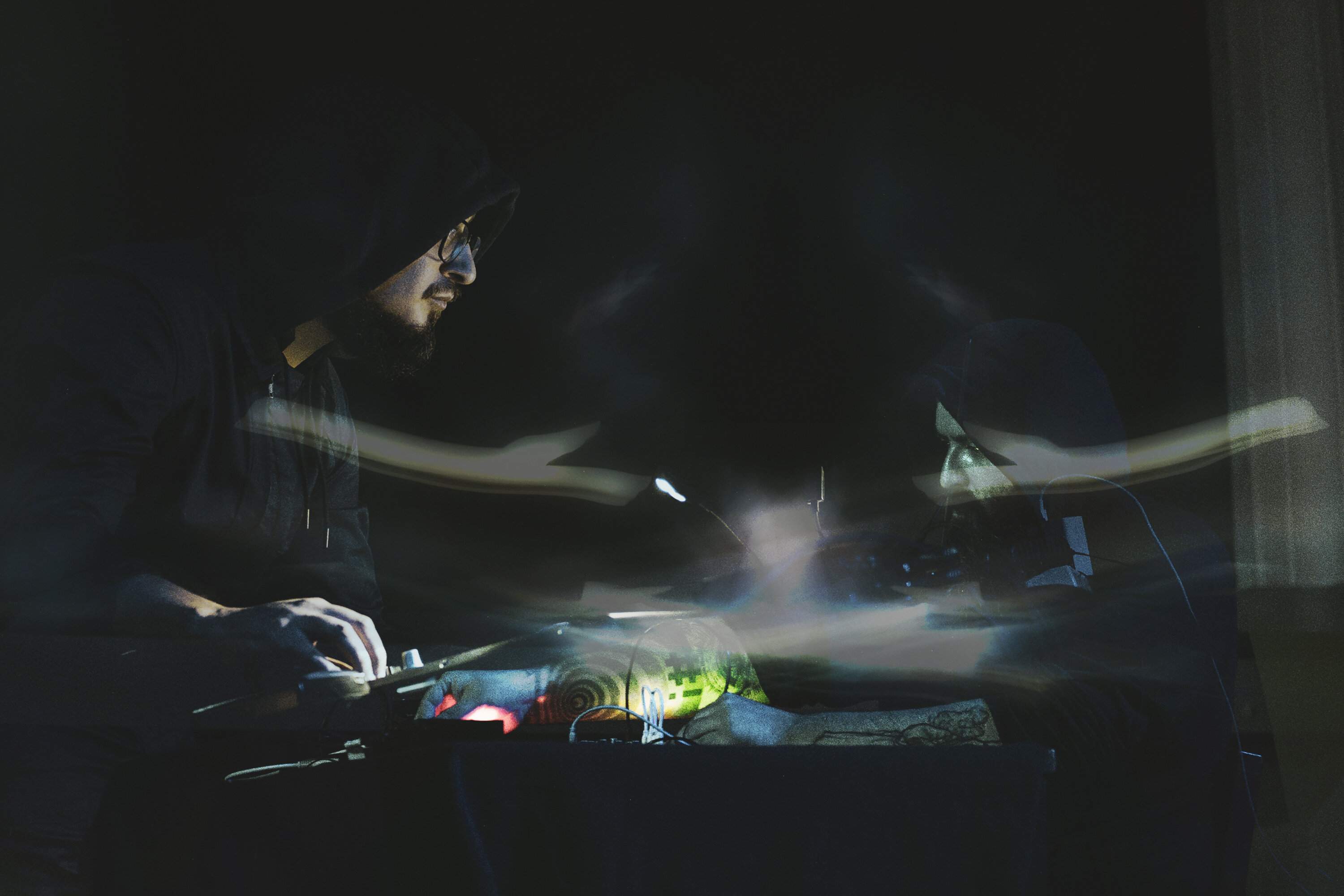
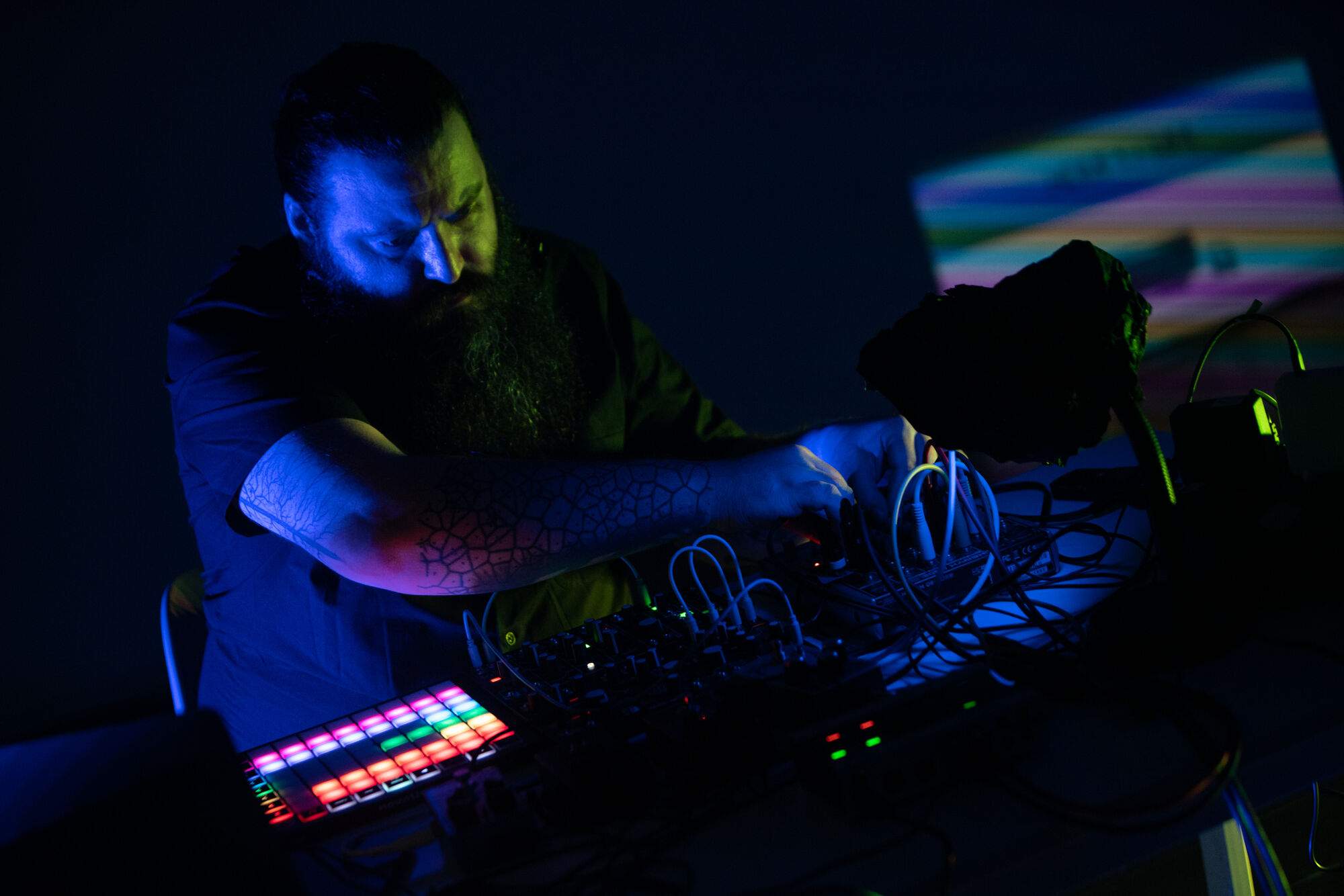
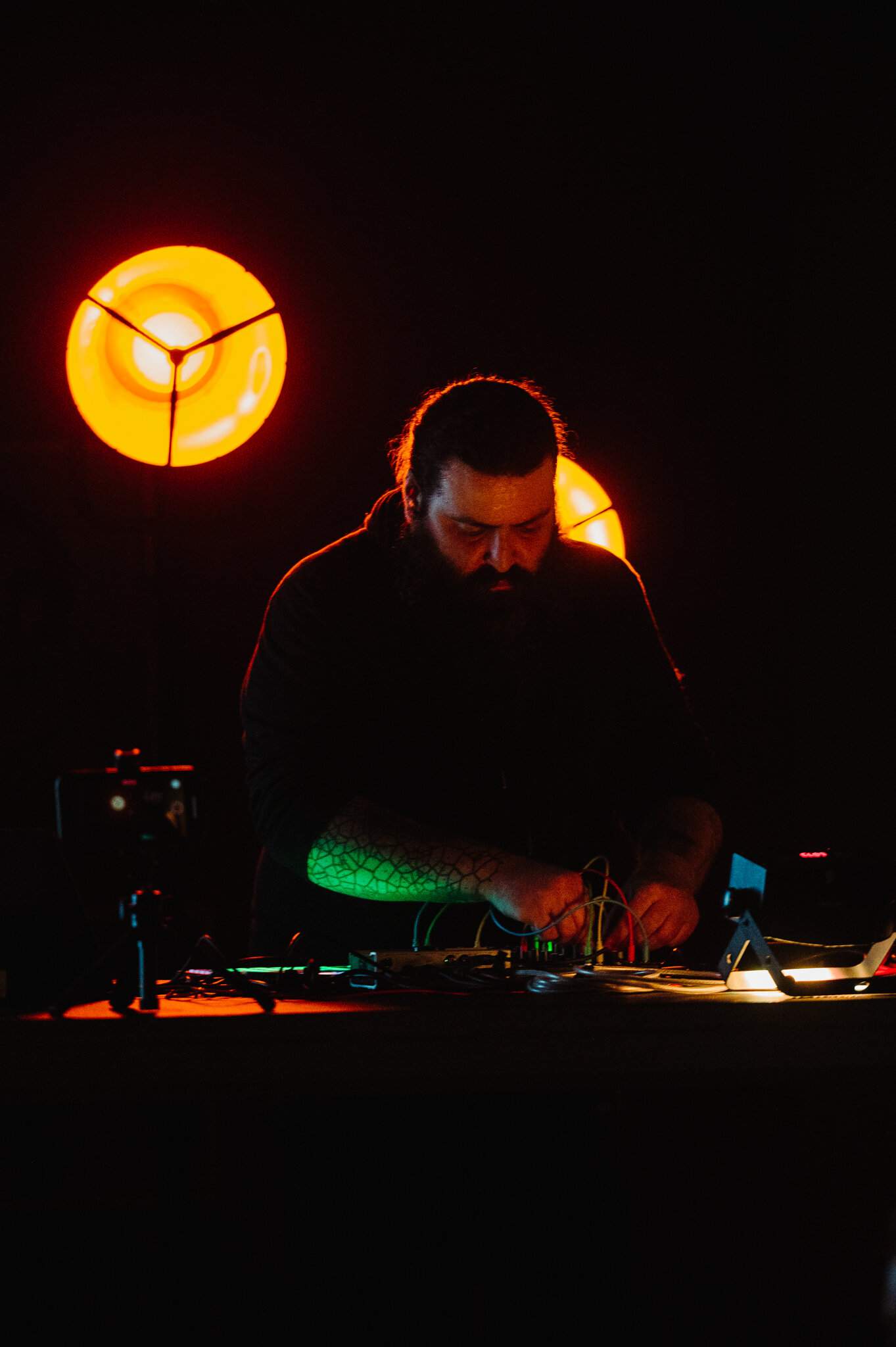
Jerome Faria (b. 1983) is a Portuguese composer and sound artist. For over two decades, his work has ranged between confrontational noise and patient drone across solo records, film and theatre scores, and live improvisation.
There's a certain kind of artist who rises from the netlabel era—someone who came of age when sharing experimental music involved uploading MP3s to servers in distant countries, when community meant forum threads and Creative Commons licences. Jerome Faria is one of these artists, though to say he arose from that period would be to understate what followed.
Born in Madeira, Faria spent his formative years in Switzerland before returning to Portugal as a teenager. Piano and guitar came first, then drums—a rhythmic foundation audible even in his most abstract work. By 2003, he had moved into electronic music, releasing as NNY through Enough Records, Test Tube, and MiMi. The music was confrontational: digital detritus reshaped into something urgent. His debut OFFEAR.EP (2004) established the template, followed by ECT (2005)—for LaFresto, it was "music built like buildings, where I walked into every one and never got lost in the long corridors."
In 2005, Faria was performing at MADEIRADIG, sharing bills with Fennesz and Florian Hecker. He returned five more times over the following six years, each time alongside more formidable company: Frank Bretschneider and Vladislav Delay in 2006–07, Alva Noto and Murcof in 2009—his duo with Hugo Olim earning praise from Alva Noto—followed by the 2011 lineup including Tim Hecker, Oneohtrix Point Never, KTL, Deaf Center, and Lee Ranaldo of Sonic Youth. His duo with Taylor Deupree that year drew notice from The Quietus: "an almost romantic sound that recalls Eno's Discreet Music."
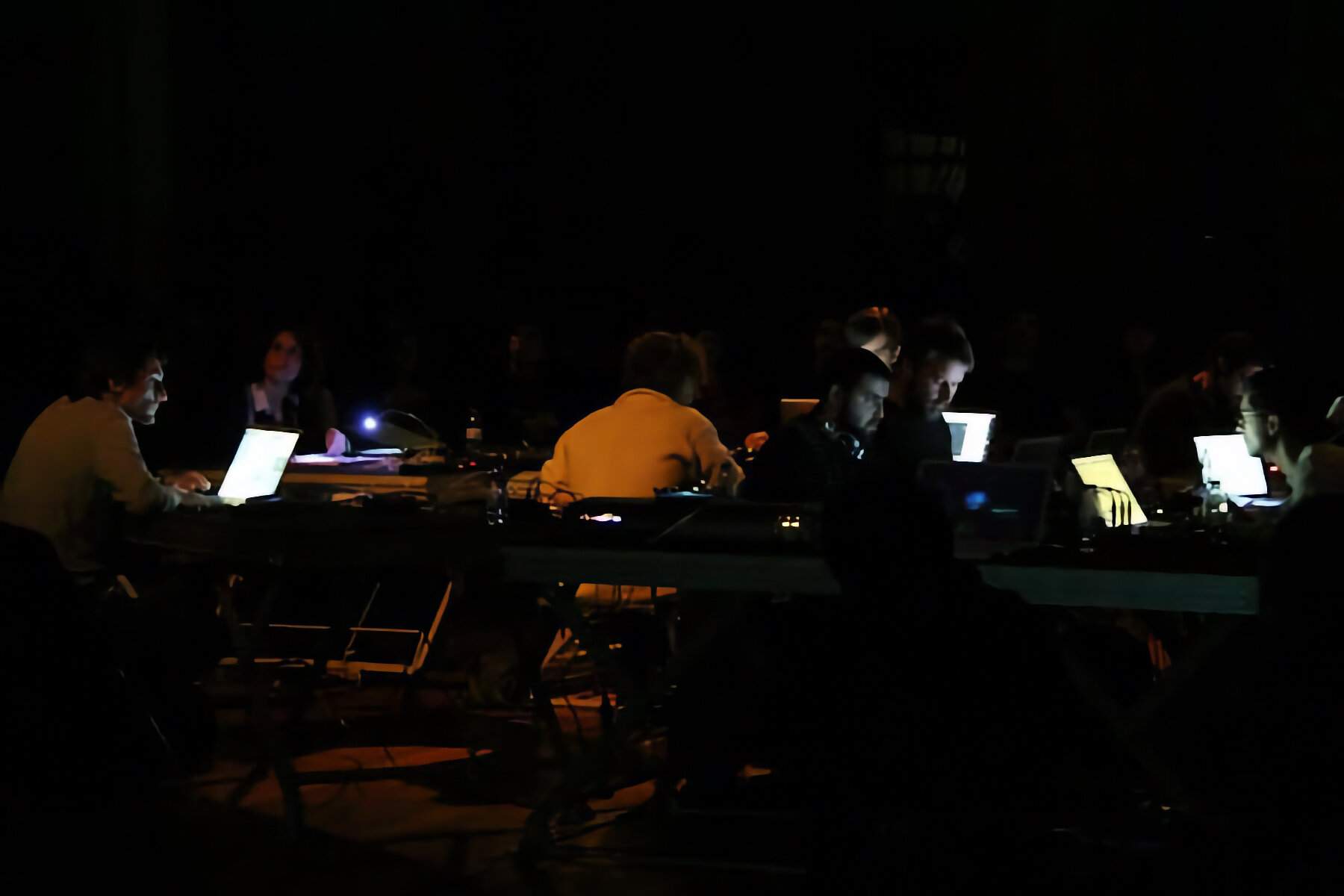
This wasn't the arc of a local artist occasionally granted access to international stages. Faria was programmed as a peer. The circuit expanded: EME in Lisbon, EME.LL in Porto—a laptop symposium bringing together sixteen Portuguese experimental practitioners—Störung in Barcelona, Festival MigrActions in Paris.
The glitch art movement had been taking shape around this territory. When Glitch: Designing Imperfection appeared in 2009—edited by Iman Moradi, Ant Scott, Joe Gilmore, and Christopher Murphy—Faria appeared alongside Kim Cascone, JODI, Lia, Mario Klingemann, and Marius Watz. Sound and visual practice had been bleeding into one another. Error had become material.
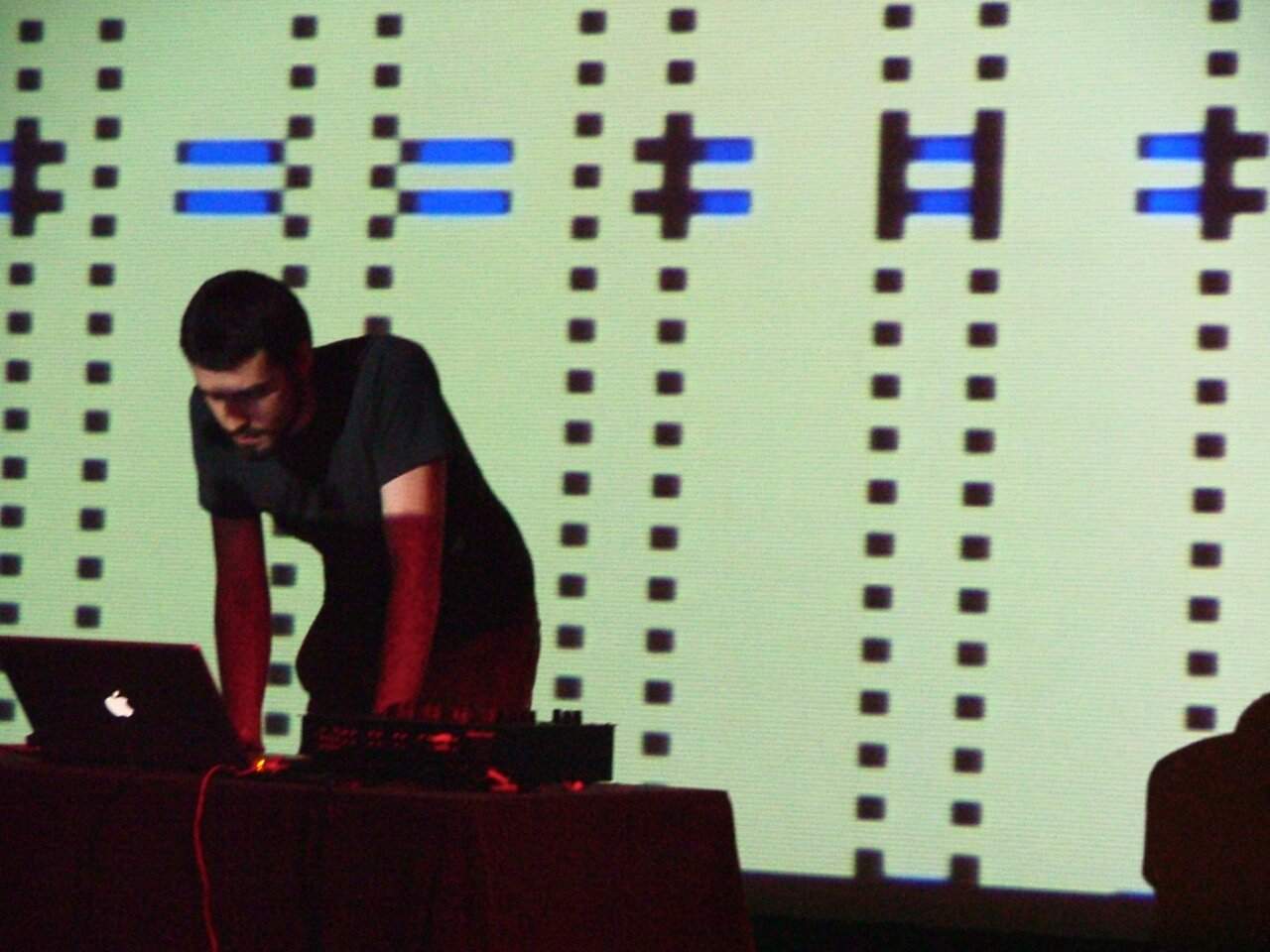
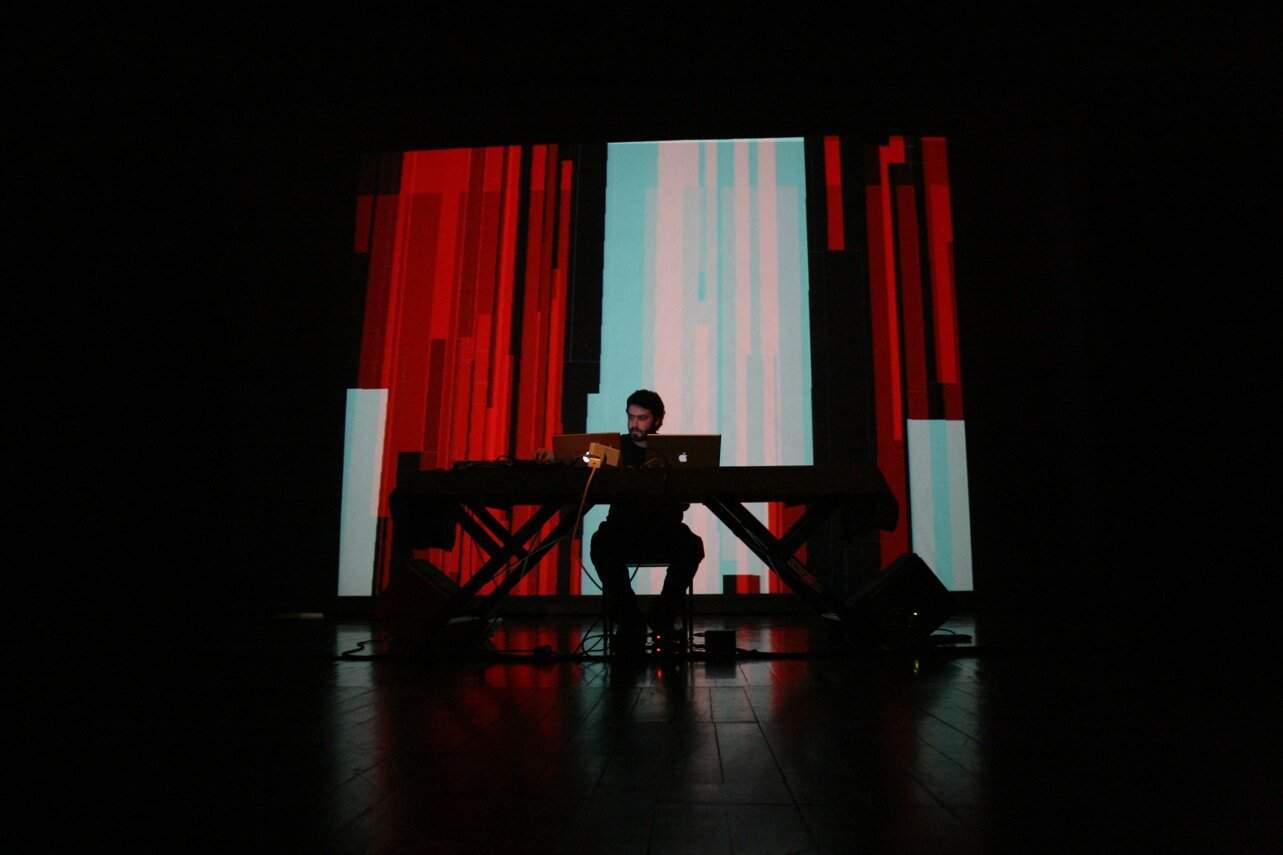

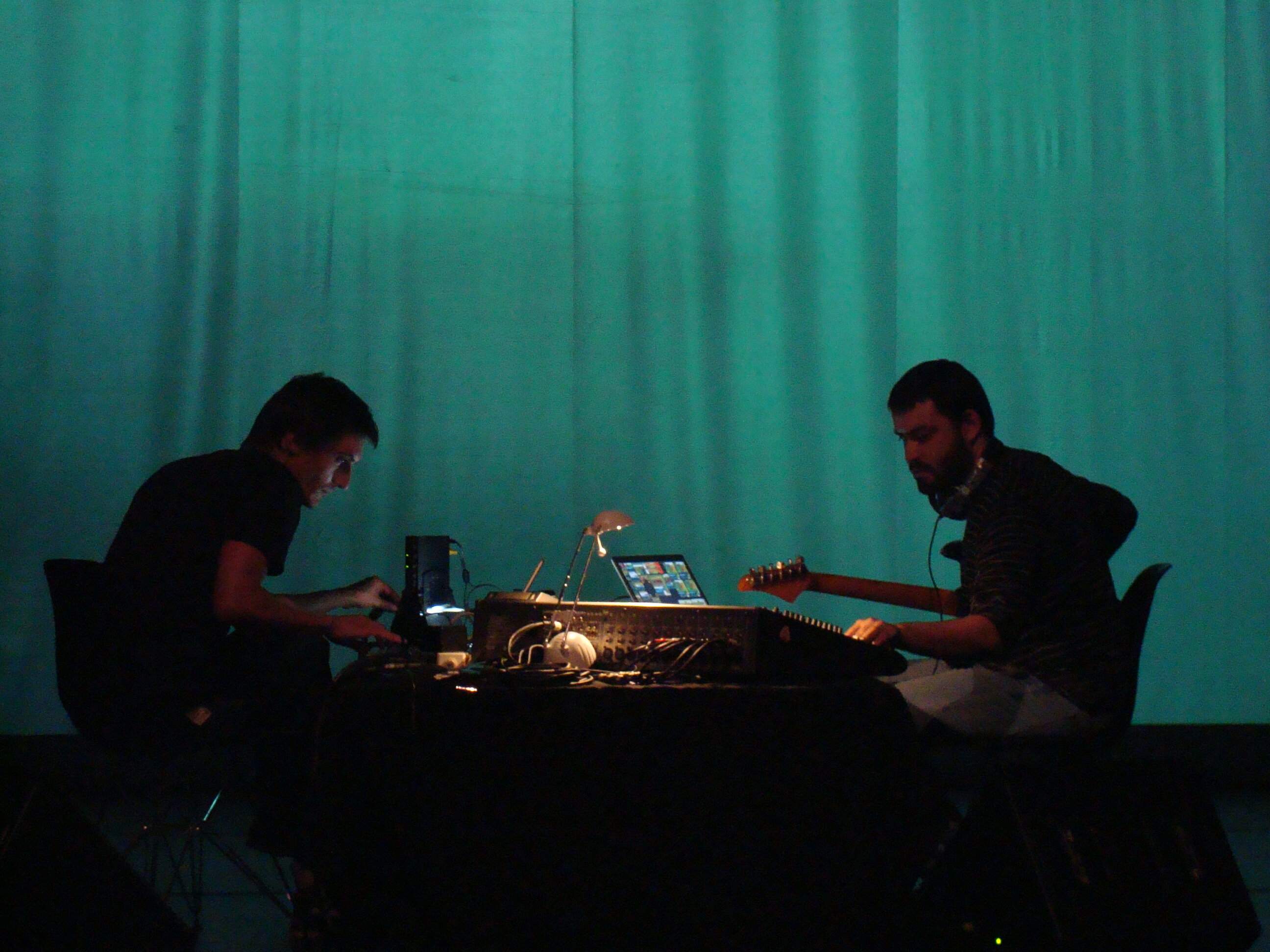

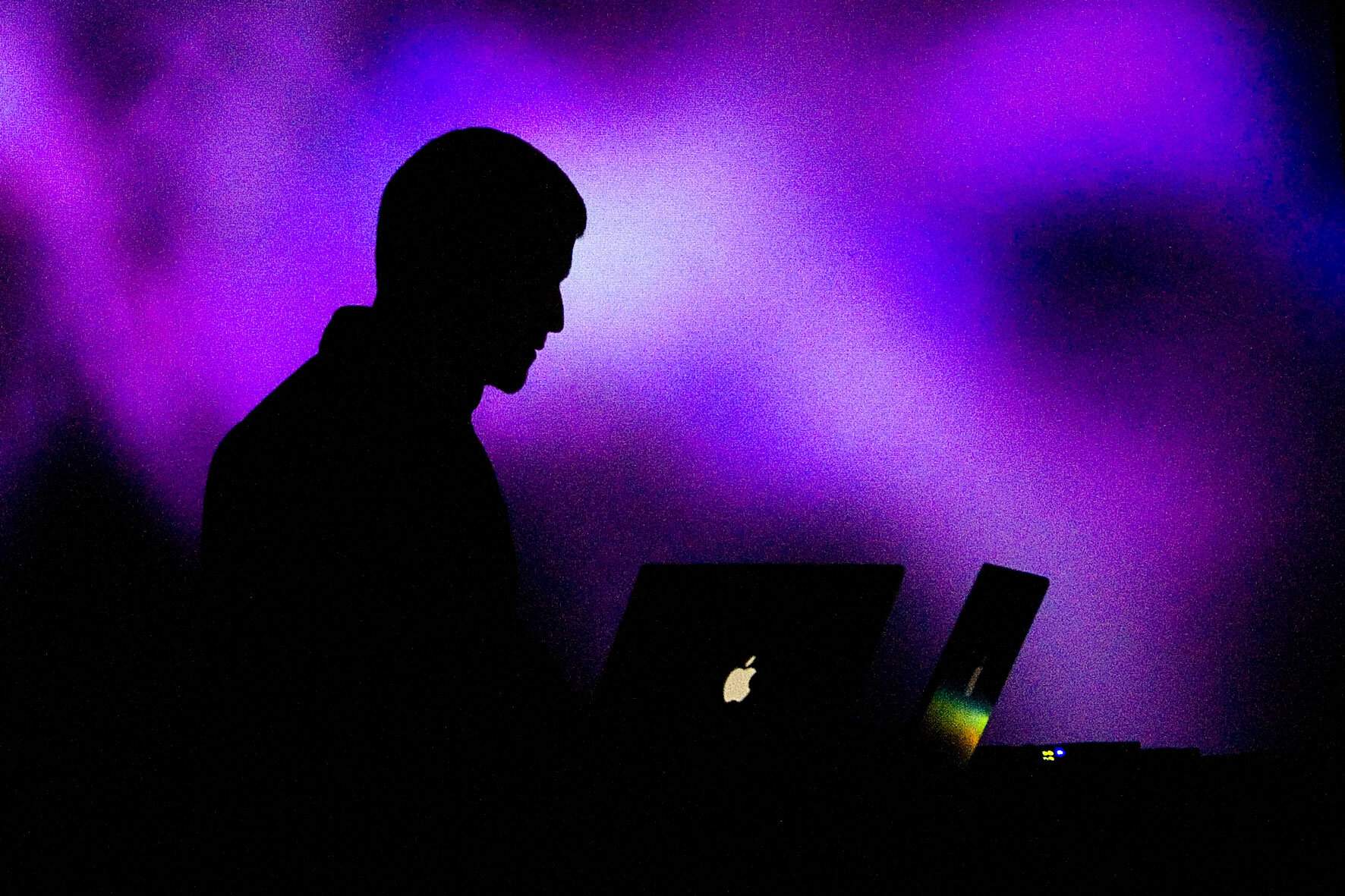
The move from NNY to his own name marked a turn towards patience, evident as early as the sparse compositions of 17:14 (2010) and fully realised in Overlapse (2012)—drones that gradually unfurled, textures requiring sustained attention. For Edição Limitada, it felt "almost as if we were contemplating the machine, forced to escape its synthesised perfection, about to stumble upon itself at any moment."
Around this time, Faria began composing for film. His score for Robert Wiene's The Cabinet of Dr. Caligari—first performed in 2013 with pianist Nuno Filipe, self-released on BRØQN a decade later—works against the film's angular expressionism rather than illustrating it, a dialogue across a century of sonic possibility.
In 2015, Faria relocated to Lisbon—leaving behind the isolation of Madeira for work in software engineering, a field adjacent to the generative systems he'd long employed in his music. That year, he opened for William Basinski. Then the practice receded, though it never disappeared entirely: the score for Margarida Paiva's Invisible Other came in 2016, a meditation on contemporary solitude.

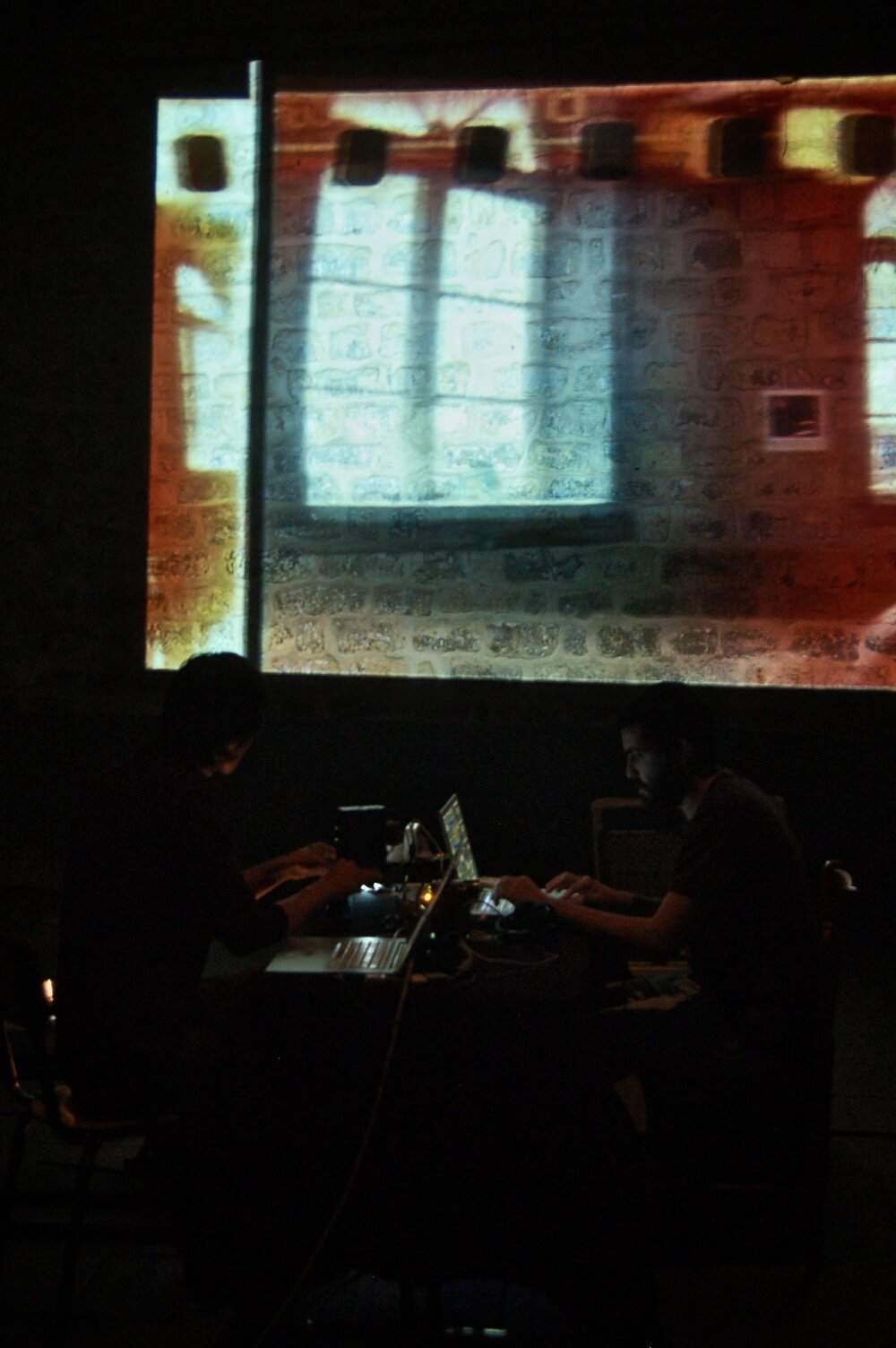
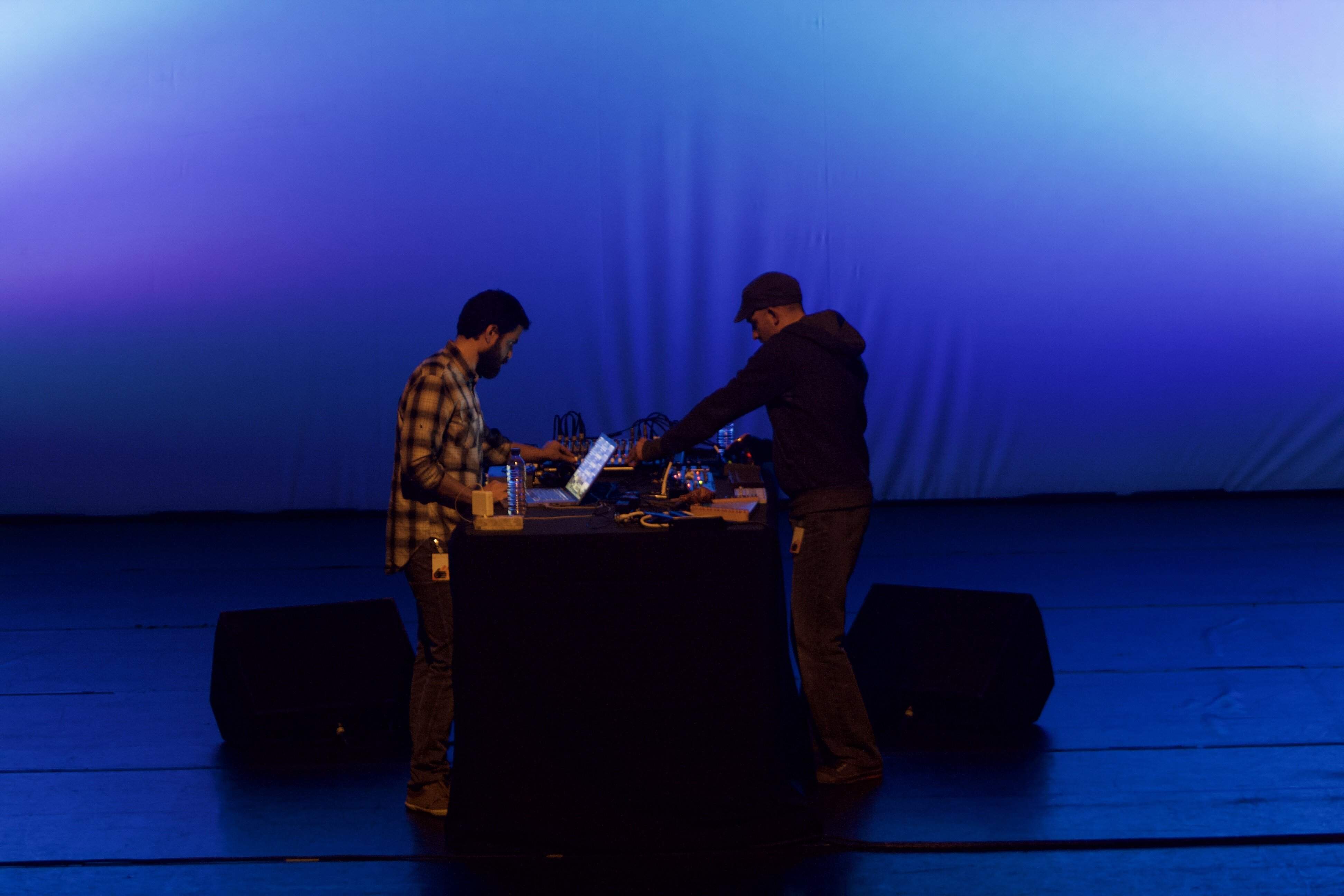
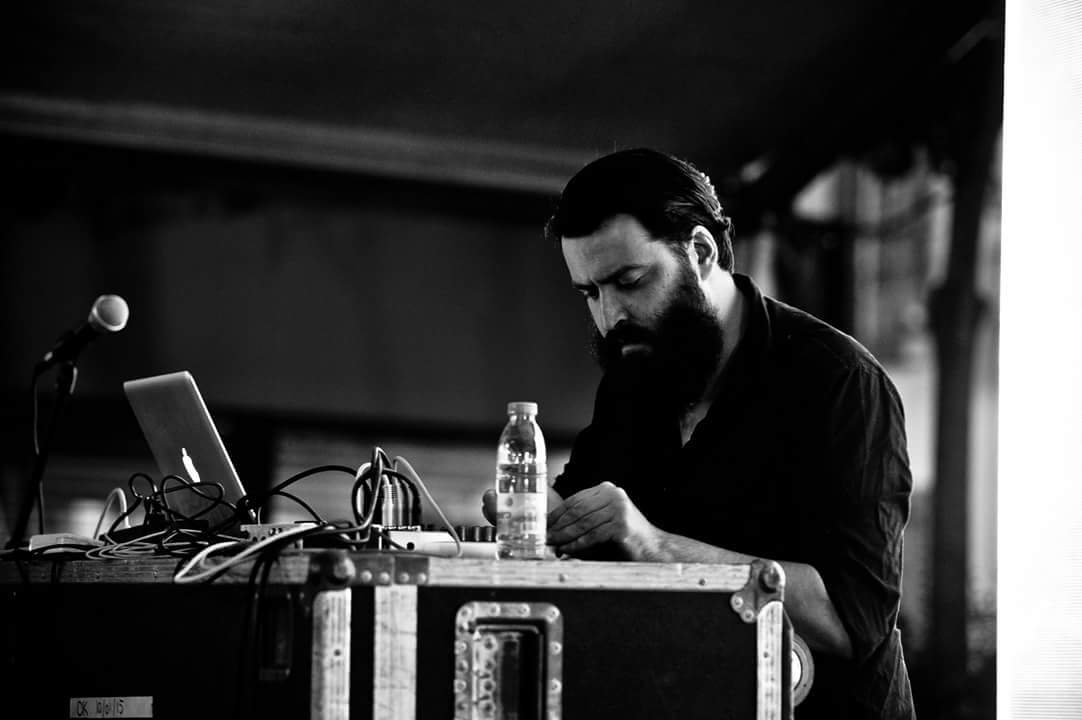

It wasn't until 2020 that he returned to sustained work, composing and performing the original score for ARAGÃO—a theatre piece celebrating the centenary of António Aragão, the Madeiran poet and artist who co-founded Portuguese Experimental Poetry, staged at the Teatro Municipal Baltazar Dias in 2021.
2504 arrived in 2024 as his most conceptually dense work. Released on 25 April—the 50th anniversary of Portugal's Carnation Revolution—the piece runs precisely 25 minutes and 4 seconds, the date written into its duration. Schaeffer's musique concrète, Radigue's analogue synthesis, Reich's phasing—deployed on archival material from before, during, and after the revolution. News broadcasts, speeches, religious celebrations, sports commentary, advertisements—all rendered as present-tense experience rather than documentary. Faria was born nine years after the revolution ended decades of dictatorship. 2504 is what it sounds like to inherit democracy without knowing its absence.
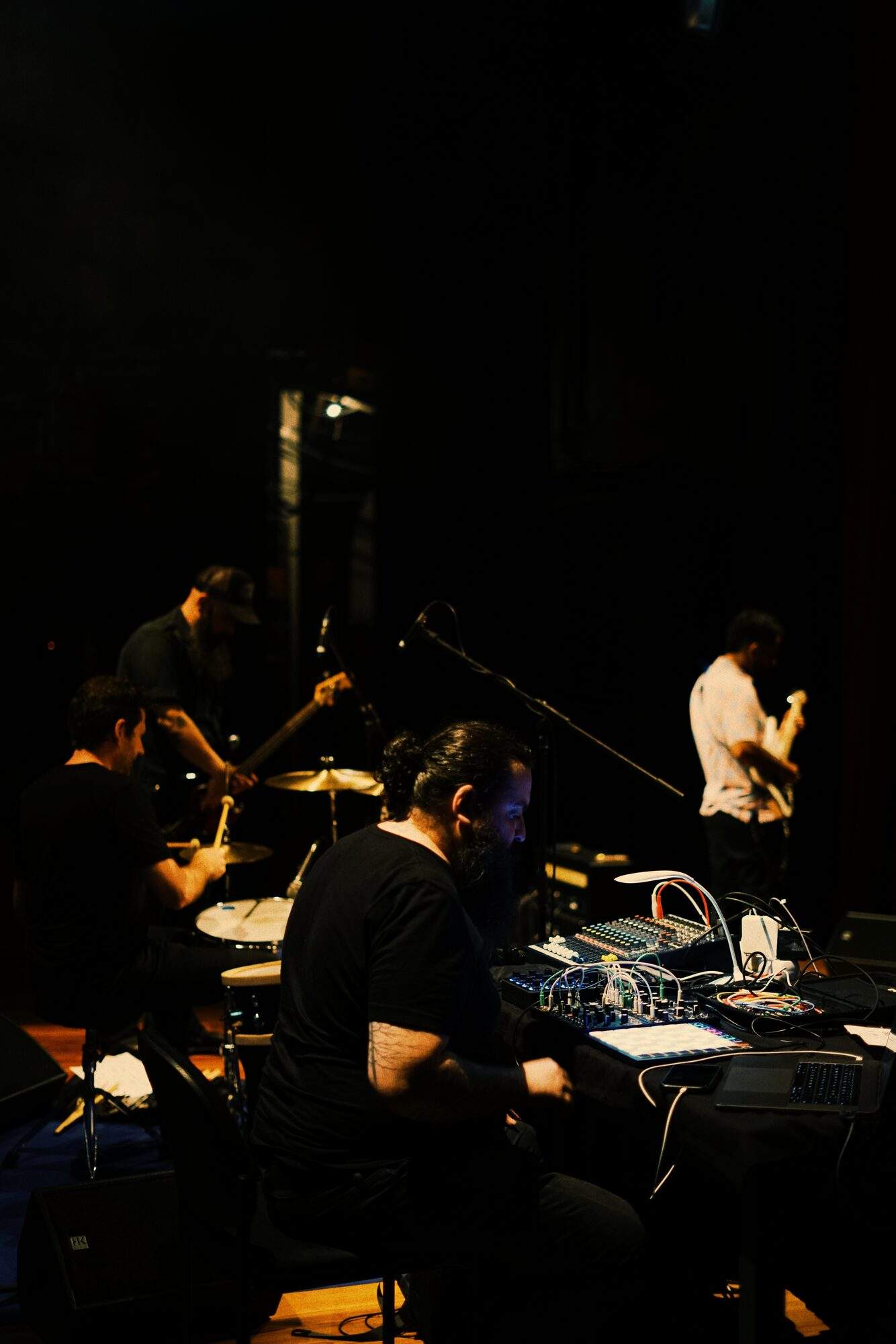
That same year, Faria formed NOx with Pedro Roque, also known as CAVERNANCIA—though the pairing had already been tested in 2021 at SMUP in Parede for the THISCO/SPH anniversary. ALTAR, their debut as NOx, is a 33-minute improvisation recorded near the nitric-acid factory that gave the duo its name, on Barreiro's Rua do Ácido Sulfúrico. Four hours, three takes, minimal post-production. The Devil's Mouth called it "beautifully twisted chaos unfolding with no respite." Where his solo work proceeds with patience, NOx operates through confrontation—a counterweight rather than a contradiction.
With Overlapse XIII (2025), Faria invited eight artists to reimagine his 2012 debut, serving as curator and mastering engineer. Contributors include Tren Go! Sound System (Pedro Pestana of 10 000 Russos) and João Vairinhos (LÖBO)—collaborators in dialogue with his own history.
In 2026, two releases pulled in opposite directions. En Veille distils the drone practice to its barest—a single unedited improvisation, no laptop and no safety net, where subharmonics and feedback stand in for an earlier generation's tape loops. Dedicated to Éliane Radigue (1932–2026), it inherits the patience of her rêverie du regard. Contraplacado moves the other way: a reworking of a track by Aires and his most explicit turn toward rhythm yet, its two halves split by instrumentation—the first dense and synthetic, the second acoustic and his first writing for orchestra, reaching back as far as the first reaches forward, older than the tools that made it.
Over two decades in, the constant isn't a sound but a way of working. The netlabel scene made no commercial demands, and that freedom let him treat music as a genuine question about sound rather than a product—and to keep reshaping the answer. That reshaping is the through-line: glitch to drone, musique concrète to his first writing for orchestra, solo patience to the confrontation of NOx. In a field where technology promises frictionless production, he still reaches for the grain, the texture, the resistance—never settling, which is what being experimental always meant.